Why was I So Stressed again? A Mid-Year Reflection
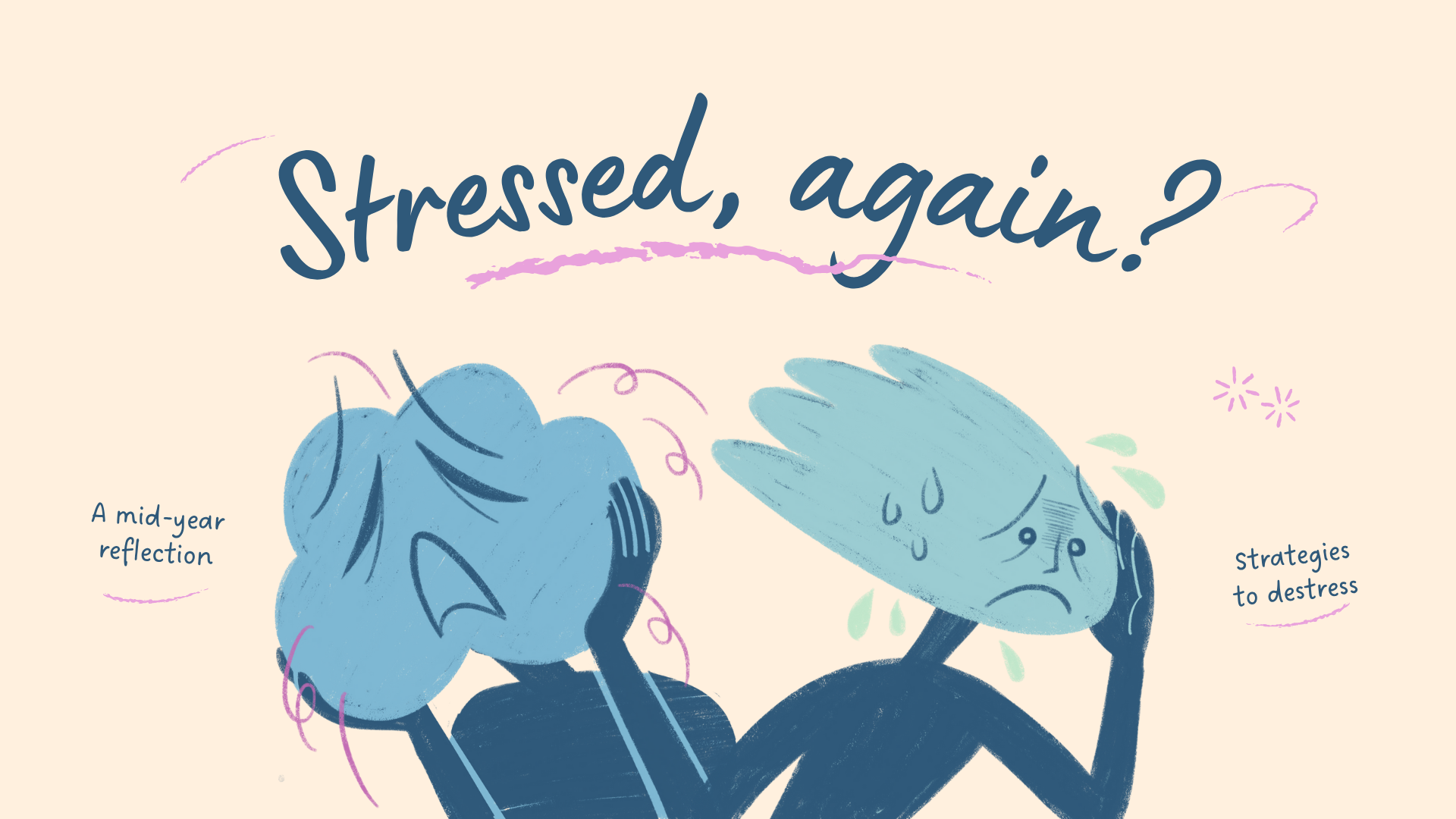
Stress is a pulse in our chest, a tension in our shoulders, a fog in our brain, and impatience with our reactions and behaviors, as well as the people around us. Last year, I wrote about stress from a deeply personal and reflective perspective, exploring how to track and regulate it through a daily check-in system. But lately, I’ve noticed that for many of us, myself included, stress has gone from a background noise to a constant companion. So, I’m returning to this topic, again, with fresher eyes and new reflections. Because the truth is: stress isn’t going away.
This year, I had the honor of implementing two large mental health projects that are dear to my heart. They were the “Healthy Communities: Faith and Mental Wellness” and another round of “Storytelling Theater.” Healthy Communities was intended to be a year-long project, but I had only five months to complete it. I was working 50 to 60 hours per week to meet all of the deadlines. Even though these projects were my passion, I am merely a human who’s highly susceptible to stress. Now, I have officially completed both of the projects, which allowed me to reflect on my mental health and stress.
According to a 2023 report from the American Psychological Association, 77% of U.S. adults say they experience stress that affects their physical health, and 76% say it affects their mental health. What’s more alarming is that chronic stress is no longer something “other people” deal with, it has become a shared, collective condition.
Often, stress doesn’t just show up in crisis moments. It slowly slips into our daily lives without us noticing and weaves itself into our routines, relationships, finances, and identities. Reflecting on the last six months, here are some of the stressors I hear most often, both in my own life and in conversations with friends, clients, and community members.
- Work stress: Unrealistic deadlines, overloaded calendars, lack of recognition and support, and micromanagement are just some of the stressors that people experience, including myself. For many professionals, especially those in caregiving or service roles, the expectation of giving endlessly without burnout is simply unsustainable. One friend told me, “I don’t even get to the weekend before I feel like I’m drowning again.”
- Political stress and immigrant safety: For many immigrants, especially those from marginalized communities, the political climate itself is a source of constant anxiety. Policies that restrict visas, increase deportations, or frame immigrants as threats to society are not just abstract news stories; they are lived realities. I am incredibly grateful that I am a US citizen, but I am still concerned and scared about the discriminatory and harmful immigrant police. Many of us are afraid to speak up, protest, or even be visible in specific spaces. It’s not just about legal status; it’s about the daily emotional toll of feeling unwanted, unsafe, and surveilled.
- Financial insecurity and the rising cost of living: Financial stress isn’t just about how much money you earn; it’s about how far your dollar goes. And lately, it’s not going far. Inflation continues to drive up the price of groceries, gas, utilities, and rent. The impact of global supply chains, tariffs, and ongoing economic uncertainty has led to noticeable increases in the cost of basic needs. For many people I talk to, including myself, the grocery store has become a place of silent dread, where familiar items double in price and they must choose between quality and affordability. Mental math is exhausting and adds a layer of constant worry about survival, rather than luxury.
- Relationship stress: From emotionally distant partners to high-conflict co-parenting to the silence of a friendship that’s faded without closure, relationship stress lingers. For many men and Asian Americans I know, the expectation to “stay strong” and not express emotional needs only makes the pressure build behind a quiet wall. A disagreement with a partner that goes unresolved for days can silently grow into resentment. Being ghosted by someone you trusted can leave you questioning your self-worth and replaying conversations in your head. And when you’re the one constantly giving emotional support but rarely receiving it, it creates a draining imbalance that eventually becomes unsustainable and forces people into emotional isolation. Relationships are supposed to be a source of support, but when they’re not, the stress can be burdensome.
- Family caregiving stress: Caring for aging parents, sick pets, or children with complex needs while also working full time and trying to care for yourself can easily become overwhelming. The emotional labor often falls unevenly, and for immigrant families, the pressure to provide across generations (and borders) adds another layer. Whether it’s the late-night phone call from your mom about another medical bill or rearranging your entire week to take your pet to three different vet appointments, it creates a tremendous toll on being the “strong one” in the family. This kind of stress doesn’t always look dramatic, but it builds up in the quiet moments to compassion fatigue, especially when you feel alone, depleted, and stretched beyond your capacity.
- Chronic uncertainty: Not all uncertainty comes from the outside world. Sometimes, the most persistent stress comes from the questions we carry inside ourselves and the ones we don’t have clear answers to. Am I on the right path? Will this relationship last? Should I change careers, move to a new city, or start over? These internal questions may seem abstract, but they create very real stress, often manifesting as restlessness, overthinking, disrupted sleep, and a sense of emotional disconnection. It’s the quiet weight of self-doubt and indecision that follows you into the shower, into traffic, into bed. This kind of uncertainty isn’t always dramatic or visible to others, but it eats away at your sense of peace and clarity over time. The pressure to “figure it all out” can feel unbearable when the answers simply aren’t there yet.
Now, I have the opportunity to take a deep breath and slow down. However, I’ve learned that de-stressing can be just as challenging. For months, I was in the constant grind. Every hour on my calendar was packed with back-to-back meetings and tasks. My mind was constantly planning the next task or resolving unexpected crises. So, when the noise finally stopped, I didn’t feel relief; I felt disoriented. The silence felt unfamiliar, almost unsettling. I realized how addicted I had become to being busy. Slowing down meant I had to sit with the feelings of fatigue, grief, doubt, and joy I had pushed aside all of these months because I didn’t have the space to feel.
So, how can I destress? It’s not easy to unwind a nervous system that’s been operating on high alert for so long.
We often talk about managing stress like it’s a technical skill, a checklist, or something to control or fix. De-stressing is about learning to soften when our own body, emotions, mind, and thoughts have been hard on us. It’s about intentionally creating space for relief, rest, and reconnection, especially in ways that honor our cultural roots, values, and lived experiences. Here are a few practices that have helped me and others in my community:
- Return to the body, not just the brain: I often try to intellectualize stress by analyzing, problem-solving, or “pushing through” it. But my body often carries the brunt of it. De-stressing is about continuously engaging in my daily healthy routines, such as morning meditation, long walks, resistance training, stretching, and reading a book in the park, among others. When my body feels safe again, then my mind follows.
- Rituals of comfort and slowness: In a fast-paced culture, choosing slowness can feel uncomfortable and counterintuitive. Thus, it requires intentional efforts and commitment to slow down. Instead of feeling the pressure to jam-pack my calendar, I only schedule essential meetings and tasks, leaving the rest open for my self-care activities. For example, I slow-brew my loose tea and drink it slowly, and cook my favorite recipe without rushing. These small and familiar acts are rituals that have helped me to regulate the nervous system and destress.
- Community as medicine: Isolation and loneliness are some of the major stressors. Socialization can reduce emotional pressure. I prioritize my time now to hang out with my friends. Often, we can de-stress together and build a stronger friendship.
- Unplugging from stress triggers: Digital stimulation from doomscrolling on social media and news apps keeps me in a constant low-grade state of tension. As part of my daily wellness routine, I have turned off notifications and uninstalled new apps and social media from my phone. Instead, I have increased my reading in both fiction and non-fiction books.
- Creative release: Painting and calligraphy are two of the arts that I always want to be better at. We know that arts and music are great tools for destressing because they help the mind release tension and shift emotional energy from being internally stuck to being outwardly positive. So, one of my summer goals is to restart painting and practice writing both English and Chinese calligraphy.
If you’ve made it this far, please take a deep breath with me.
We may not be able to eliminate stress from our lives completely, but we can learn to relate to it differently. We can slow down. We can pause before the breaking point. We can choose small acts of care and consistency that build resilience over time.
So today, I invite you to check in with yourself. Not with judgment, but with honesty. What kind of stress are you carrying right now? What would it feel like to put some of it down, even just for a moment? What’s one thing, just one, that you can do today to feel a little lighter, a little more supported, a little more you?
Whether it’s a walk, a call to someone who understands, five minutes of stillness, or simply drinking water slowly and mindfully, we can be on the path of destress. Every day, in small ways, we can reclaim our peace.
Recent Comments